
 Posted by
Agentic AI combines the versatility of large language models with the precision of traditional programming. Unlike generative AI that creates content, agentic AI systems can autonomously perform tasks by designing their own workflows and using available tools. This capability revolutionizes business processes. It reduces human error and cuts employees’ low-value work time by 25% to 40%. These AI-powered workflows can speed up business processes by 30% to 50% in departments of all sizes.
Organizations are still learning about these impressive potential gains. About 30% of organizations are looking into agentic options, and 38% are running pilots, but only 11% use these systems in production. This piece will show why traditional software services won’t meet 2026’s needs. We’ll get into the architecture that makes agentic AI better and share ground examples of how this technology transforms enterprise workflows.
Table of Contents
Why Traditional Software Services Fail in 2026
Traditional software services, once the life-blood of enterprise operations, show critical flaws in 2026’s increasingly autonomous landscape. Organizations moving toward intelligent systems face these limitations as impossible barriers to progress.
Legacy API Limitations in Autonomous Environments
Legacy infrastructures in 2026 restrict agentic AI implementation because they were designed for self-contained environments with minimal external data flow. Teams trying to integrate older Oracle ERP systems with cloud CRMs or AI-powered analytics tools usually end up with fragile, high-maintenance connectors that produce poor results. Many organizations can’t properly maintain these outdated systems. One Treasury department still runs IBM mainframes from 40-50 years ago that were very hard to modify because they feared system crashes.
These legacy architectures cost much more to maintain compared to actual development costs. These systems also lack the modern capabilities needed for today’s integration:
- No native API support for smooth connectivity
- Can’t handle unstructured data sources
- Won’t work with a microservices architecture
Agentic AI needs smooth access to varied data sources through standardized interfaces to work well. Yet many organizations say that getting data from legacy systems becomes their biggest problem when they don’t have APIs available. This technical gap between traditional infrastructure and AI requirements creates a basic mismatch that stops companies from making use of autonomous agents’ full potential.
ETL Bottlenecks in Real-Time Decision Systems
Real-time decision making, the life-blood of agentic AI operations, faces major hurdles with traditional ETL (Extract, Transform, Load) processes. Organizations handling massive data volumes deal with intense processing pressure that overwhelms regular data pipelines. Quick-moving sectors like financial trading or emergency response can lose big when delays last just milliseconds.
Common ETL bottlenecks that undermine agentic systems include:
- Extraction challenges: Slow queries from large datasets without proper indexing or pulling entire datasets repeatedly instead of incremental updates
- Transformation issues: Complex operations that overwhelm memory/CPU resources, especially with inefficient code
- Loading limitations: Row-by-row database insertion instead of bulk operations, where single INSERT statements can take hours rather than minutes
These performance bottlenecks create chain reactions throughout organizations. Process interruptions hurt timely responses to market changes and make analytical results less accurate. This leads to unhappy customers, lost trust, and financial losses.
Static Workflow Engines vs Dynamic Task Execution
Static workflows present another basic limitation. These pre-defined sequences of tasks arranged in fixed order work well for simple, repetitive processes, but fail in unpredictable environments. The business landscape in 2026 changes constantly, so processes must adapt their path as needed.
Dynamic workflows can adjust to changing circumstances, making them perfect for complex tasks that need decision-making capabilities. This divide has become central to discussions about implementing agentic AI. One industry analysis notes, “There’s been a philosophical debate of sorts happening on how to build AI agents,” with some companies wanting fully dynamic agentic architecture while others support more structured approaches.
Static workflows show their limits, especially when you look at how their rigid architecture clashes with agentic AI’s need for adaptability. Traditional workflows follow predictable patterns, but AI agents need freedom to choose the best steps for each unique situation-this ability fundamentally conflicts with conventional software design principles.
Companies continue to accept new ideas through agentic AI in 2026. Legacy custom software services with their API limitations, ETL bottlenecks, and static workflows now represent technological dead ends instead of viable solutions for forward-thinking enterprises.
Agentic AI Definition and Core Capabilities
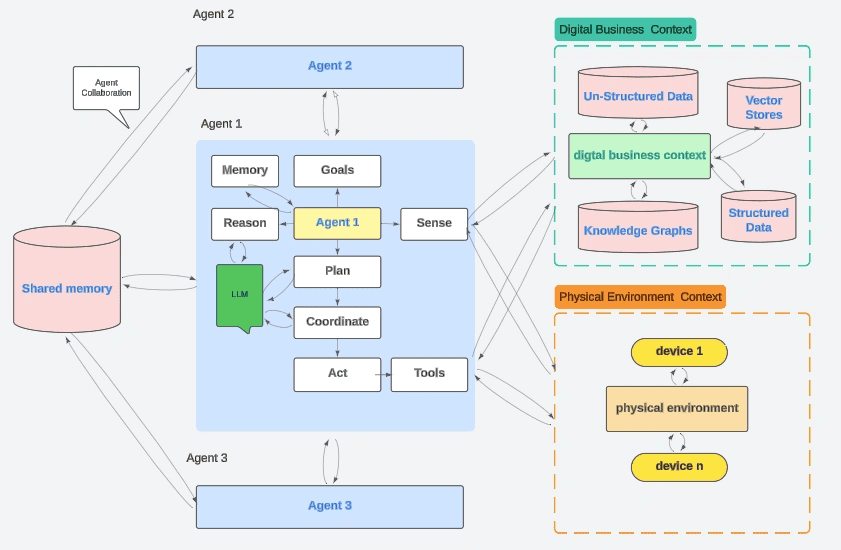
Agentic AI marks the most important progress in artificial intelligence, setting itself apart from conventional AI systems. These systems can work toward specific goals with minimal human oversight. The life-blood of agentic AI lies in combining LLMs’ flexibility with traditional programming’s precision. This combination lets it tackle complex goals by creating its own workflows and using available tools.
Perception → Reasoning → Planning → Action Loop
The life-blood of how agentic AI works is its cognitive cycle – what experts call the perceive-reason-plan-act loop. This cycle lets it work on its own in changing environments.
The perception phase starts when agents collect information from their surroundings through sensors, databases, or digital interfaces. This data builds the context needed for the next steps.
During the reasoning stage, the large language model works as the system’s brain to analyze the collected data. The AI assesses possible actions through logical analysis, probabilistic inference, and predictive modeling.
The planning component breaks down goals into manageable steps and finds the best approach. AI agents can handle complex scenarios and run multi-step strategies to reach specific goals.
The action phase executes tasks by connecting with external tools and software through APIs. The AI looks at results and uses this feedback to improve future actions. This creates a continuous improvement cycle that sets agentic systems apart from traditional AI.
Short-Term vs Long-Term Memory Layers
Memory architecture is the foundation of what agentic AI can do. Unlike traditional AI models that handle each task separately, AI agents with memory can keep context, spot patterns over time, and learn from past interactions.
Short-term memory works like computer RAM and holds relevant details for current tasks within a conversation. This working memory lasts briefly due to LLMs’ limited context windows. Teams often use rolling buffers or context windows that keep recent data before overwriting it.
Long-term memory helps agents become smarter and more personalized over time by keeping information across multiple sessions. This memory has three key types:
- Episodic memory: Keeps track of specific past events and experiences. This helps the agent remember similar situations and improve its approach based on what worked before.
- Semantic memory: Holds facts, definitions, and concept relationships that make up the agent’s knowledge base.
- Procedural memory: Stores learned skills and behavior patterns. This lets the agent run complex workflows automatically.
Agentic AI vs Generative AI: Execution vs Generation
The main difference between agentic and generative AI lies in what they do. Generative AI creates content from prompts, while agentic AI runs multistep tasks on its own to reach specific goals.
Generative AI responds to user inputs, but agentic AI takes initiative by making decisions and acting with minimal supervision. This focus on execution helps agentic AI move beyond content creation to solve complex problems and automate workflows.
The design differences are clear. Agentic systems work more independently toward goals with little human input. They set their own objectives, assign tasks, and adapt to new situations they haven’t seen before.
Companies using AI solutions see real-life differences between these approaches. Generative AI speeds up content creation and answers simple questions – perfect for single tasks. Agentic AI, however, automates complex processes and tackles multi-layered problems, which saves time and resources.
Agentic AI Architecture That Replaces Legacy Systems
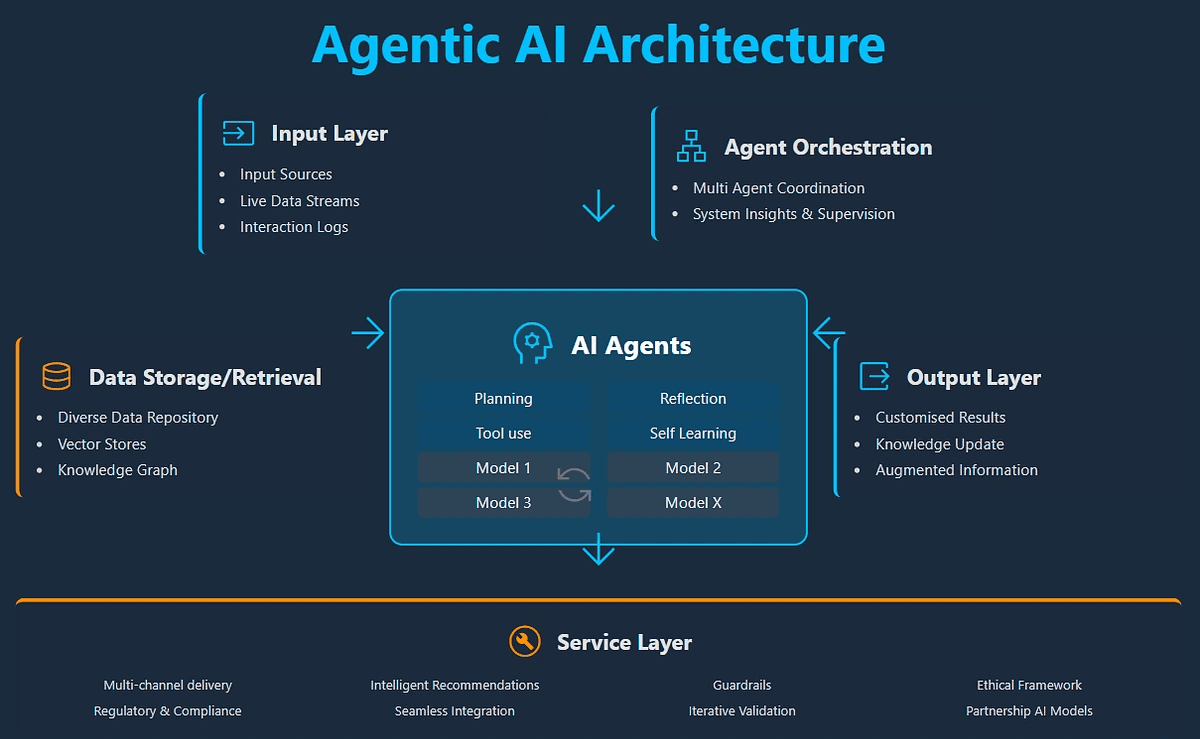
Image Source: Medium
Organizations need a complete architectural overhaul to implement agentic AI because legacy systems have basic limitations. Enterprise architectures today don’t deal very well with AI agents’ autonomous nature. These architectures were built for predictable workflows and human oversight.
Event-Driven Integration with ERP/CRM Systems
Modern agentic AI architecture begins with event-driven integration. This reshapes the scene of how AI systems work with traditional enterprise software. Event-driven architectures create uninterrupted, real-time communication between systems instead of the usual back-and-forth pattern.
SAP’s Event Add-on for ERP shows this approach in action. It turns regular applications into event producers and consumers. The system spots important business changes like new sales orders or inventory updates. These changes become structured event messages that go to external systems through asynchronous channels. AI agents can respond right away.
This event-driven design brings several benefits:
- Single events push in real-time for quick processing
- High-volume events move in scheduled batches
- Original mass loads give access to past data
- Delta processing in packs optimizes performance
Companies that add agentic AI break down data silos this way. They create feedback loops that help agents learn and adapt through business systems.
Model Context Protocol (MCP) and Agent-to-Agent Protocol (A2A)
Advanced agentic systems rely on two protocols that work together. Model Context Protocol serves as a “USB-C port for AI applications.” It gives AI applications a standard way to connect with external systems. Anthropic created MCP so AI agents could use tools, APIs, and external resources through a simple interface. Agents don’t need to know how these tools work inside.
Google’s Agent-to-Agent protocol lets AI agents work together smoothly. A2A supports clear task lifecycles and real-time updates through Server-Sent Events or webhooks. Different agents can work together without sharing their secret logic. This makes everything more secure and helps complex workflows run better.
These protocols create a strong framework:
- MCP connects agents with external tools
- A2A helps agents talk to each other
- Both use standard JSON over HTTP interfaces
Zero-Trust Identity and Access for Autonomous Agents
Security becomes vital as AI agents get more freedom to act. Zero-trust architecture for agentic AI treats every interaction with suspicion. AI agents need the same identity and access rules as human users.
Each AI agent must have its own identity and access token to do anything. Agents show their authenticated tokens with the right permissions to perform tasks. Many systems use OAuth2 standards to handle permissions.
This security model’s core parts include:
- Agents never trust each other automatically
- OAuth2 handles all agent permissions
- Tokens need constant checking
- Every agent action gets logged
Organizations can track and hold agents accountable this way. This solves a big worry for companies using AI in sensitive work.
Companies can bridge old systems with modern AI by using this complete architecture. It combines event-driven integration, standard protocols, and zero-trust security to create a collaborative AI environment.
Real-World Agentic AI Examples in Enterprise Workflows
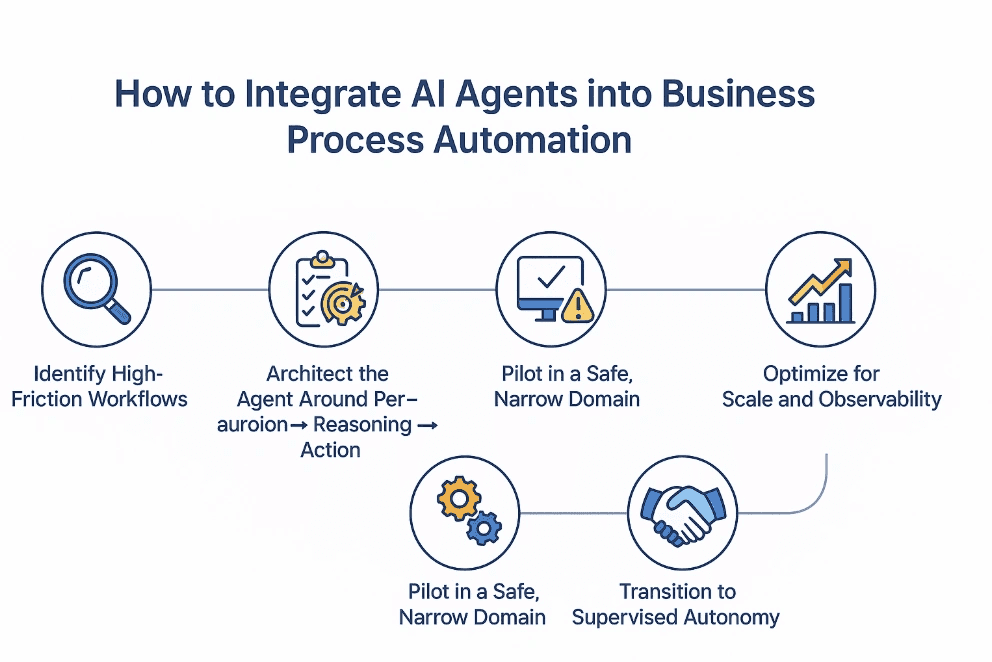
Companies of all sizes now use agentic AI systems to simplify critical processes. These systems show better efficiency, accuracy, and customer satisfaction. The results prove that agentic AI creates business value beyond theoretical concepts.
Customer Support Ticket Triage and Resolution
Customer service stands out as one of the most mature uses of agentic AI. Studies show 78% of organizations use AI agents. These systems go beyond traditional chatbots. They understand customer intent, get data from multiple sources, and handle complex tasks like refunds or troubleshooting.
AI technology reshapes the scene of support processes through several key features. The system sorts and routes support requests instantly. It pulls customer details from CRM systems and past interactions. High-volume routine requests get resolved automatically. The system reaches out to customers proactively when it spots negative feedback patterns.
The results on the ground have been remarkable. Companies using intelligent AI assistants cut support costs by up to 35%. A learning sciences company reduced chats sent to human agents by 45%. They did this by adding agentic AI with text-to-speech, intent recognition, and Salesforce integration. The Australian Red Cross scaled its operations impressively. They went from handling 30 to 300,000 incidents daily during wildfire emergencies in just 24 hours.
Autonomous Procurement and Inventory Management
AI monitors inventory, predicts demand, and adjusts purchases live in procurement and supply chain operations. McKinsey & Company reports that AI-driven logistics can cut operational costs by up to 15%.
These systems shine by ordering from suppliers automatically when stock runs low. They can change shipping routes based on conditions, adjust buying strategies, and maintain compliance all at once.
The technology now makes decisions on its own, moving past simple automation. GEP’s multi-agent framework, to name just one example, has specialized agents that manage RFx, supplier scorecards, and contract awards. This cuts manual work substantially while being more accurate. Trimble’s Autonomous Procurement platform studies carrier performance and bidding patterns. It predicts pricing before load posting, giving companies better negotiating power.
Finance Agents for Cash Forecasting and Risk Detection
Financial teams see measurable benefits from agentic AI. These systems bring speed and accuracy to finance departments, from matching transactions to finding unusual patterns.
AI-powered cash flow forecasting stands out as particularly valuable. The error rates drop by up to 50% compared to older methods. These systems combine data from ERP systems, CRM platforms, and market feeds. They analyze news and social media text through natural language processing.
Treasury teams no longer struggle with manual forecasting. They get constant cash updates, marked variances, and smart suggestions based on actual transaction patterns. A Forrester study found these systems delivered 307% ROI over three years with USD 3.40M in extra revenue.
Finance departments use AI agents for more than forecasting. They run continuous risk audits to spot unusual patterns and tackle new threats. The agents watch compliance, speed up underwriting, and offer AI-driven financial advice. They create investment strategies based on market conditions and personal risk comfort levels.
Why Agentic AI Outperforms SaaS in Workflow Orchestration
A fundamental change from traditional SaaS to agentic AI changes how we arrange workflows. This happens through intelligent automation, distributed decision-making, and continuous improvement that goes beyond what conventional software can do.
Multiagent Collaboration in a Variety of Domains
Multiagent systems perform better than traditional SaaS applications. They make shared problem-solving possible across specialized domains. Traditional monolithic applications try to handle everything in a workflow. However, multiagent architecture breaks complex tasks into manageable pieces that specialized agents handle. This approach works like human teams, where digital experts work together toward common goals.
Multiagent systems offer unique benefits compared to single-agent approaches:
- Systems stay reliable through redundancy and error compensation
- Adding more specialized agents makes scaling easy
- Complex workflows become simpler through better problem breakdown
Real-world systems use different ways to work together. Rule-based collaboration uses preset guidelines for predictable tasks. Role-based collaboration gives specific duties within an organization. Model-based collaboration represents the most advanced approach. Here, agents build internal models to understand their state and predict outcomes even when things are uncertain.
Token-Based Execution vs Static API Calls
AI systems that use agents make use of token-based execution instead of static API calls. This creates a different security and functionality model. API keys stay the same until someone changes them manually. Tokens, however, generate automatically when users log in and expire quickly.
This difference means more than just technical details. It shows a new way of thinking about system interactions. Tokens allow precise access control based on specific user contexts. API keys offer fixed permissions without limiting data access. This security-first design becomes crucial as agent systems arrange workflows across multiple systems at once.
Adaptive Learning from Digital Exhaust
The biggest advantage of agentic AI lies in its ability to learn constantly from operational data-the digital footprints left during everyday use. These systems use Retrieval Augmented Generation (RAG) pipelines. They capture context, match it with relevant knowledge, and use it in future operations.
This adaptive learning cycle helps agent systems:
- Capture user context through direct inputs and hidden signals
- Turn contextual data into concept keywords that show user intent
- Find relevant knowledge from structured knowledge graphs
- Create custom responses based on individual profiles and domain expertise
This constant learning helps agentic AI create personalized experiences that change based on individual needs. Traditional SaaS, with its fixed workflows, cannot match this level of adaptation.
Governance, FinOps, and Risk in Agentic AI Systems
Reliable agentic AI deployments need strong governance frameworks as their foundation. These systems continue to gain autonomy, and resilient controls become vital to oversee operations. Teams must maintain oversight without losing automation benefits.
Agent Cost Monitoring and Token Budgeting
Token-based pricing can surprise you with unexpected costs when agentic AI grows, especially when you have complex workflows with multiple model calls. AI agents might rack up big bills through too many tool calls or endless reasoning loops if left unchecked.
Smart FinOps strategies start with usage limits, quotas, and throttling mechanisms. Teams should add anomaly detection tools to prevent usage spikes. Your organization needs clear tagging strategies that track resources by project, team, or specific AI workload. This enables exact cost tracking between different business functions.
Detailed token tracking shows which agent behaviors eat up your budget. Teams can spot whether document processing agents, multi-agent conversations, or external tool calls drive costs up by linking every expense to specific agent actions.
Kill Switches and Escalation Paths
Kill switches work like circuit breakers – they’re quick, obvious, and testable safeguards that stop agent operations right away. The best setup starts with a global hard stop that cuts off tool permissions and stops queues. You’ll also need soft switches that let you pause sessions and block specific areas.
These safety tools need to spend and rate governors that limit tokens, API calls, and task budgets. Role-based owners with multi-factor control should make critical shutdown decisions.
Auditability and Immutable Logs for Agent Actions
Immutable audit logs create tamper-proof records of everything agents do, which builds clear accountability chains. These logs only allow new entries and use cryptographic security through Merkle trees and hash chains to keep data safe.
Production audit logs need specific features. They must be append-only so entries stay put, show signs of tampering, link to specific agents, keep time order, and allow independent verification. This helps with forensic analysis, regulatory compliance, and incident auditing in many environments.
Good governance means these logs must record timestamps, actor details, and action specifics. The logs need cryptographic protection that prevents even system administrators from making changes.
Conclusion
Agentic AI will completely change enterprise operations by 2026. This piece explores why traditional software services can’t keep up with modern needs. They struggle with dynamic, autonomous processes. Legacy API limits, ETL bottlenecks, and rigid workflows can’t provide the agility businesses need today.
The way agentic AI works marks a radical alteration from conventional systems. It shines through its perception-reasoning-planning-action loop, sophisticated memory layers, and execution-focused approach. Generative AI just creates content, but agentic AI takes charge of complex tasks with minimal human oversight.
The system needs new foundations to work properly. Event-driven integration takes over from batch processing. Standardized protocols create smooth communication. Zero-trust security frameworks keep autonomous operations safe. These building blocks work together to solve problems that plague older systems.
Ground applications already show the most important business value. Customer support sees up to 45% fewer human agent transfers. AI manages whole supply chains by itself. Finance teams get forecasts with 50% lower error rates. These improvements give companies a competitive edge.
When multiple agents work together, they use tokens and learn as they go. This helps agentic AI perform better than traditional SaaS solutions. The system gives specialized tasks to different agents. It learns from operational data and keeps getting better – something regular apps just can’t do.
Without doubt, companies must govern this technology responsibly. Token budgets prevent excess costs. Kill switches provide safety controls. Audit logs that can’t be changed ensure accountability. These protections need to evolve with the technology.
Moving from traditional software to agentic AI isn’t just an upgrade – it’s a complete change in how organizations work. Companies that adopt this technology will gain unprecedented abilities. Those stuck with old systems risk falling behind. Current software services will likely become obsolete as agentic AI’s autonomous, adaptive nature becomes the standard for enterprise operations.
Key Takeaways
Agentic AI is poised to revolutionize enterprise operations by 2026, making traditional software services obsolete through autonomous decision-making and adaptive workflows that outperform static systems.
• Legacy systems create insurmountable barriers: API limitations, ETL bottlenecks, and static workflows prevent organizations from implementing autonomous AI agents effectively.
• Agentic AI operates through intelligent loops: The perception-reasoning-planning-action cycle enables continuous learning and autonomous task execution beyond simple content generation.
• New architecture replaces old foundations: Event-driven integration, standardized protocols (MCP/A2A), and zero-trust security create the infrastructure needed for autonomous agents.
• Real-world results prove business value: Organizations achieve 45% reduction in support transfers, 50% lower forecasting errors, and 35% cost savings in customer service.
• Multiagent collaboration outperforms SaaS: Distributed problem-solving, token-based execution, and adaptive learning from digital exhaust create continuously improving systems.
• Governance frameworks ensure responsible deployment: Token budgeting, kill switches, and immutable audit logs provide essential controls for autonomous operations.
The shift from traditional software to agentic AI represents a fundamental paradigm change. Companies embracing this technology gain unprecedented operational capabilities, while those maintaining legacy systems risk competitive obsolescence as autonomous, adaptive AI becomes the enterprise standard.
FAQs
How will agentic AI transform enterprise operations by 2026?
Agentic AI is expected to revolutionize enterprise operations by enabling autonomous decision-making and adaptive workflows. It will outperform traditional software services through its ability to perceive, reason, plan, and act with minimal human oversight, potentially reducing employees’ low-value work time by 25% to 40% and accelerating business processes by 30% to 50%.
What are the key advantages of agentic AI over traditional SaaS solutions?
Agentic AI surpasses traditional SaaS through multiagent collaboration, token-based execution, and adaptive learning. It can distribute specialized tasks across multiple agents, use dynamic tokens for secure operations, and continuously learn from operational data, creating systems that evolve and improve over time – capabilities that static SaaS applications cannot match.
How are businesses already benefiting from agentic AI implementations?
Real-world applications of agentic AI are already showing significant benefits. In customer support, organizations have seen up to a 45% reduction in transfers to human agents. AI-driven cash flow forecasting in finance departments has reduced error rates by up to 50%. Procurement systems are autonomously managing entire supply chains, leading to operational cost reductions of up to 15%.
What challenges do organizations face when implementing agentic AI?
Key challenges include managing costs through token budgeting, implementing proper governance frameworks, and ensuring security. Organizations need to establish clear usage limits, implement kill switches for safety, and maintain immutable audit logs for accountability. There’s also the challenge of integrating agentic AI with legacy systems and overcoming resistance to change within the organization.
What is Agentic AI?
Agentic AI refers to autonomous AI systems that can perceive situations, reason through problems, plan actions, and execute tasks independently. Unlike traditional or generative AI, agentic AI can design its own workflows, use tools, and make decisions with minimal human intervention.
Will agentic AI completely replace traditional software services?
While agentic AI is set to transform many aspects of enterprise operations, it’s unlikely to completely replace all traditional software services in the immediate future. Some critical tasks may still require the precision and control offered by conventional software. However, organizations that fail to adopt agentic AI risk falling behind as it becomes the new standard for enterprise operations, particularly in areas requiring dynamic decision-making and adaptive workflows.
How is Agentic AI different from generative AI?
Generative AI focuses on content creation, such as text, images, or code. Agentic AI goes further by executing multi-step tasks, making decisions, interacting with systems via APIs, and continuously improving through feedback loops. In short, generative AI generates, while agentic AI acts.
Why will traditional enterprise software fail by 2026?
Traditional software relies on static workflows, rigid APIs, and batch-based ETL processes. These systems cannot adapt in real time or support autonomous decision-making. As businesses demand speed, adaptability, and intelligence, agentic AI replaces these limitations with dynamic, self-learning workflows.
How does Agentic AI improve business operations?
Agentic AI reduces manual effort by 25–40%, accelerates workflows by up to 50%, lowers operational costs, and minimizes human error. It autonomously handles tasks like customer support resolution, procurement optimization, financial forecasting, and risk detection.
What industries benefit the most from Agentic AI?
Industries such as enterprise IT, finance, supply chain, healthcare, customer support, logistics, and procurement benefit significantly. Any domain requiring complex decision-making, real-time responses, and workflow orchestration can leverage agentic AI effectively.
What is required to implement Agentic AI in an enterprise?
Successful implementation requires event-driven architecture, standardized protocols like MCP and A2A, integration with ERP/CRM systems, governance frameworks, and AI cost monitoring. Partnering with experienced AI consultants accelerates adoption and reduces risk.